Incoming vs Outgoing Switchgear Functions and Differences Explained

What is an Incoming Switchgear ?


An incoming Switchgear is a High or Low Voltage switchgear Cabinet that receives power from an external source.  Generally, it receives 10kV power from the power grid. This 10kV power is then routed through the switchgear to the 10kV busbar. The switchgear used for receiving and distributing this power is called the incoming Switchgear.


Specifically, an incoming Switchgear is the main switchgear that receives power from the low-voltage side of a transformer (low-voltage power supply) into the distribution system. In substations with voltage levels of 35-110kV and above, the incoming  switchgear is the low-voltage (10kV) switchgear cabinet of the transformer. That is, the first cabinet connected from the low-voltage side output of the transformer to the initial end of the 10kV busbar is called the incoming swtichgear, also known as the transformer low-voltage incoming switchgear.


Incoming Switchgear Cabinet


What is an outgoing switchgear cabinet?


An outgoing switchgear cabinet is a switchgear cabinet that distributes electrical energy from the busbar.  For example, a switchgear cabinet that transmits power from a 10kV busbar to a power transformer is one of the 10kV outgoing switchgear cabinets.  An outgoing switchgear cabinet is installed on the low-voltage side of the transformer to transmit electrical energy to the low-voltage busbar.  Several low-voltage switchgear cabinets are then installed on the low-voltage side to distribute power to various loads. These low-voltage switchgear cabinets are all outgoing switchgear cabinets. If the low-voltage system is introduced from a nearby source, the low-voltage switchgear cabinet where the incoming line is connected is also an incoming switchgear cabinet, just at a lower voltage. Switchgear cabinets that draw power from the low-voltage busbar are also outgoing switchgear cabinets.

Outgoing Switchgear Cabinet


The Function of the Incoming Switchgear


The incoming switchgearl is the main switchgear Cabinet on the load side. This cabinet carries the total current of the entire busbar, and its importance is evident because it connects the main transformer to the low-voltage load output.


In terms of relay protection, when a fault occurs on the low-voltage busbar or circuit breaker of the main transformer, the overcurrent protection on the low-voltage side of the transformer trips the incoming feeder panel switch to clear the fault.  A fault on the low-voltage busbar also relies on the backup protection on the low-voltage side of the main transformer to trip the incomingl switchgear. The transformer differential protection also trips the circuit breaker on the low-voltage side of the transformer, i.e., the incoming switchgear.


The Function of Outgoing Switchgear Cabinet


Electricity is supplied from the 10kV busbar to the power transformer via a switchgear cabinet; this switchgear cabinet is one of the 10kV outgoing switchgear cabinet.


An outgoing switchgear cabinet is installed on the low-voltage side of the transformer to supply electrical energy to the low-voltage busbar.  Several low-voltage switchgear panels are then installed on the low-voltage side to distribute power to various loads. These low-voltage switchgear cabinet are all outgoing cabinet.


The above two types of switchgear cabinets are distinguished by their function. They are used in both low-voltage and high-voltage systems, and the same type of switchgear (such as the low-voltage GGD and the high-voltage KY28) can be used as an incoming switchgear cabinet, outgoing switchgear cabinet.


Further Information

Specific incoming and outgoing wiring methods: top-in/bottom-out, bottom-in/top-out, side-in/top-out, side-in/bottom-out, etc.


1. If using busbar bridges for incoming power, top entry is mandatory; if using cables, bottom entry is preferred.


2. The main connection methods between the transformer and the low-voltage incoming cabinet include: copper busbar side entry, busbar bridge top entry, and cabinet bottom cable entry.


3. Cables are generally routed from the bottom in and out, while busbars are more often routed from the top in and out. The specific method depends on the designer's considerations, including equipment selection, wiring method, civil engineering conditions, investment amount, and the owner's preferences.

The Heart of Smart Buildings Unlocking HVAC Efficiency with Premium PLC Control

The Silent Energy Drain in Every Modern Building


Walk into any office, hotel, or shopping mall enjoying perfect climate control, and you’re experiencing one of modern engineering’s wonders—and one of its greatest hidden costs. Central air conditioning systems, while essential, are often energy gluttons, with their circulating water pumps running at full throttle regardless of actual need. This outdated "always-on" approach doesn’t just spike electricity bills; it wears down equipment and inflates your carbon footprint.

But what if your HVAC system could think for itself? What if it could adapt in real-time, delivering precise comfort while slashing energy use by 30%, 40%, or even 50%?

That’s not a future concept. It’s available today, engineered and built with precision at Gaobo Power Solution.


Precision Engineered Intelligence: The Gaobo PLC Control Cabinet


PCL Control Box

At Gaobo Power Solution, we don’t just manufacture control cabinets; we build the intelligent nervous system for central air conditioning. Our specialized PLC (Programmable Logic Controller) Control Cabinet is designed with one mission: to make HVAC operation dramatically more efficient, reliable, and cost-effective.

PLC Control Cabinet with ABB Parts

The core innovation is Variable Frequency Drive (VFD) control for circulating water pumps. Instead of a simple on/off switch, our system uses real-time data—like temperature, pressure, and flow rates—to dynamically adjust pump speed. The pump delivers exactly the power needed, moment by moment. No waste. No strain. Just optimal performance


Why Component Quality Isn't Just a Detail—It's Everything


A control system is only as strong as its weakest part. For mission-critical building infrastructure, compromise isn't an option. That’s why at our factory, Gaobo Power Solution, we source and integrate only components from the global leaders in industrial automation.


The Brain: Siemens Control System. Our cabinets are built around the renowned reliability and precision of Siemens PLC CPUs. Paired with an intuitive Siemens touchscreen, this gives facility managers unparalleled control and visibility into system performance.


The Muscle: ABB Frequency Converter. The ABB drive is the workhorse that precisely modulates the pump motor's speed and torque. Known for its robustness and energy-saving algorithms, it ensures smooth, efficient operation day in and day out.


The Nerves: Schneider Electric Switches & Protection. The entire system is safeguarded by premium Schneider components. From circuit breakers to terminal blocks, this ensures safety, durability, and seamless electrical integration.


This trifecta of Siemens, ABB, and Schneider isn’t a marketing choice; it’s an engineering philosophy. It guarantees a product that stands the test of time in demanding 24/7 operational environments.


Built with Pride at Gaobo Power Solution


This isn't a generic, off-the-shelf box. Every PLC Control Cabinet is meticulously assembled, programmed, and tested at the Gaobo Power Solution factory. Our expertise lies in understanding the intricate dance of HVAC systems and translating that into robust, reliable automation.


We handle the complex integration of top-tier components, rigorous quality control, and custom programming to match your specific system parameters. You don’t just get a cabinet; you get a Gaobo-engineered solution.


Is This Solution Right for Your Building?


If you manage or own a facility with a central chilled or hot water system, the answer is almost certainly yes. Our cabinets are ideal for:


Commercial Office Towers

Hotels and Resorts

Hospitals and Healthcare Facilities

Shopping Malls and Large Retail Spaces

University Campuses

Data Centers

Industrial Manufacturing Plants


The Gaobo Promise: A Smarter, Leaner, Greener Building

PLC Control Cabinet Factory

In today's world, efficiency is no longer just about cost savings; it's about operational excellence and environmental responsibility. An HVAC system with a Gaobo intelligent control cabinet at its heart is a strategic asset.


Ready to stop wasting energy and start optimizing your building’s performance?


Contact Gaobo Power Solution today. Let’s discuss how our premium PLC Control Cabinets, built with Siemens, ABB, and Schneider components, can be customized to unlock significant savings and reliability for your specific central air conditioning system.


Gaobo Power Solution: Engineering Efficiency into the Heart of Your Building.

What is Box-type Substation, and what are its advantages?

Whats is Box-type Substation?

A box-type substation, abbreviated as "box substation," is internationally known as a "prefabricated substation" or "compact substation."  It is a complete set of power distribution equipment that integrates high-voltage switchgear, distribution transformers, low-voltage switchgear, electricity metering equipment, and reactive power compensation devices, all pre-assembled in one or more fully enclosed, moisture-proof, and rust-proof steel structures at the factory according to a specific wiring scheme.

Simply put, it's a "portable mini-substation," achieving the integration and modularization of substation, power distribution, control, protection, and metering functions.

Gaobo Power Solution Factory make high quality  Modern Power Distribution System Box-type Substation and offer custom service.

High Quality Box-type Substation

Main Features:

1. Integration and Modularization: All equipment of a traditional civil engineering substation is integrated into one or several connectable modules, resulting in a compact structure and achieving "factory-built substations."

2. Rapid Deployment: After arriving at the site, only positioning the modules, connecting cables, and commissioning are required for operation. The construction period is shortened by more than 60% compared to traditional substations.


3. Fully Enclosed Operation: The modules are made of metal or non-metallic (environmentally friendly) materials, with a fully enclosed design and a protection rating typically reaching IP23-IP54. This effectively prevents dust, moisture, and small animals from entering, making them suitable for harsh outdoor environments.

4. Small footprint: Compared to traditional civil engineering substations, it saves approximately 70%-90% of land area, making it particularly suitable for areas with limited land resources.

5. Aesthetically pleasing and environmentally harmonious: The enclosure can be designed to blend in with the landscape (e.g., with wood grain patterns or covered with greenery), easily integrating into urban or scenic environments.

6. Movable and reusable: When the power load center shifts, the entire substation can be relocated to a new location for continued use, resulting in a high return on investment.

Outdoor Box-type Substation

Application:

1. Urban public power distribution: Power grid expansion and end-user power supply for streets, residential areas, commercial centers, and parks.

2. Temporary power supply: Temporary power needs for construction sites, large-scale events, disaster relief, etc.

3. Industrial and mining enterprises: Independent power supply units for workshops or production lines in mines, oil fields, and factories.

4. New energy sector: Used as step-up substations or collection stations for photovoltaic power plants and wind farms.

5. Transportation infrastructure: Distributed power supply points along highways, railways, airports, and port terminals.

6. Rural power grid renovation: Quickly solves the problems of long power supply radius and low voltage quality in rural areas.


Core components and key technical parameters:


Component Major Equipment Key Parameters
High-Voltage Room High-voltage load switch, fuses, surge arresters, live-line indicators

Rated voltage: 10kV, 35kV

Rated current: 630A

Short-circuit breaking current: 16kA, 20kA

Protection class: IP3X

Transformer Room Distribution Transformers (typically dry-type or oil-immersed)

Rated capacity: 200kVA, 400kVA, 800kVA, 1250kVA

Impedance voltage: Uk% = 4%, 6%

Insulation class: Class F, Class H

Low-voltage switchgear room Low-voltage circuit breakers, metering instruments, capacitor compensation devices, intelligent monitoring units

Rated voltage: 0.4kV

Rated current of main circuit: up to 4000A

Compensation capacity: Configured at 20%-40% of the transformer capacity

Enclosure Structure Steel frame, sandwich panels (with insulation), ventilation and cooling system  |  Shell Material: Color-coated steel, stainless steel, aluminum, non-metallic (GRC/SMC)

Enclosure material: Color-coated steel, stainless steel, aluminum plate, non-metallic (GRC/SMC)

Protection rating: IP23D, IP54

Corrosion resistance rating: C4 or higher


Major Advantage:

1. High investment efficiency: Significant savings in civil engineering, design, and installation costs, resulting in an overall cost reduction of approximately 30%-50%.

2. Extremely short construction period:  From ordering to commissioning, it only takes a few weeks to one month, greatly accelerating the power supply process.

3. High Safety and Reliability:

    Five-way interlocking: Equipped with a complete mechanical or electrical interlocking system to prevent misoperation.

    Fully insulated/semi-insulated: The high-voltage section can adopt a fully insulated enclosed structure to reduce the risk of electric shock.

    Intelligent monitoring: Optional online monitoring systems for temperature, humidity, smoke, and access control are available for unattended operation.

4. Environmentally friendly and aesthetically pleasing: Factory production reduces on-site pollution and noise; flexible design minimizes disruption to the urban landscape.

5. Easy maintenance: Each unit is independent, and maintenance work does not interfere with other units. The intelligent monitoring system enables remote fault diagnosis and status monitoring.

6. High standardization and flexibility: The product series is highly standardized, and customized designs can be provided to meet specific customer needs.

Box-type Substation

Box-type substations are a typical product of the modern power distribution system's evolution towards miniaturization, intelligence, environmental friendliness, and aesthetic integration. They perfectly address the pain points of traditional substations, such as large footprint, long construction periods, and environmental impact, and are particularly well-suited to the power needs of new urbanization, distributed energy integration, and rapid deployment.  With the advancement of the Internet of Things and the pursuit of carbon neutrality goals, intelligent box-type substations integrating more smart sensing, energy efficiency management, and low-carbon technologies will become one of the core nodes of future power distribution networks.

ATS Automatic Transfer Switch Seamless Dual Power Supply Solutions---Gaobo Power Solution

What is an ATS Cabinet:

ATS, also known as ATSE, stands for Automatic Transfer Switch, commonly referred to as a dual-power automatic transfer switch. The national standard definition of an ATS product is an electrical appliance consisting of one (or more) transfer switches and other necessary electrical components, used to detect power circuits and automatically transfer one or more load circuits from one power source to another.

This device is used to switch between mains power and backup power and provide electricity. When the mains power fails, it automatically starts the backup power supply (generator set) and switches preset important loads to the diesel generator set. When the mains power is restored, it cuts off the diesel generator set and automatically switches the loads to mains power. The diesel generator set automatically shuts down after cooling for 5 minutes and returns to standby mode.

ATS Dual Power Cabinet

Key Features and Benefits

The dual-power supply is an automatic transfer switch that integrates switching and logic control, eliminating the need for an external controller and achieving true mechatronics integration. It features voltage detection, frequency detection, a communication interface, and electrical and mechanical interlocks, enabling automatic, remote electric, and emergency manual control. Operation is achieved through a logic control board that uses various logic commands to manage the operation of the motor and gearbox. This enables the motor to drive the switch spring, storing energy and releasing it instantaneously via an acceleration mechanism. This allows for rapid circuit connection/disconnection or circuit switching, with clearly visible status indicators providing safety isolation and significantly improving both electrical and mechanical performance.

Switches are suitable for automatic switching between main and backup power supplies in power supply systems, or for automatic switching and safety isolation of two load devices. Transfer switches are primarily used in power distribution or motor networks with AC 50Hz, rated voltage 440V, DC rated voltage 220V, and rated current from 16 to 4000A, for switching between one main and one backup power supply, or for switching between mains power and generator sets. They can also be used for infrequent connection and disconnection of circuits and for line isolation.

Indoor ATS Dual Power Cabinet

Typical Applications:

Our products are widely used in power transmission and distribution systems and automation systems in important power supply locations where power outages are not permitted, such as fire stations, hospitals, banks, and high-rise buildings.


Features of Dual Power Automatic Transfer Switch:

(1) Employs double-row composite contacts, a horizontal connection mechanism, micro-motor pre-energy storage, and microelectronic control technology to achieve near-zero arcing (arc-free shield);

  (2) Uses reliable mechanical and electrical interlocking technologies;

  (3) Employs zero-crossing technology;

  (4) Features clear on/off position indication and padlock function, reliably isolating the power supply from the load. High reliability and service life exceeding 8000 cycles;

  (5) Integrated electromechanical design, accurate, flexible, and reliable switching; good electromagnetic compatibility; strong anti-interference capability; no external interference; and high degree of automation.

  (6) The fully automatic type requires no external control components, has an attractive appearance, small size, and light weight. The logic control board manages the operation of the motor and gearbox directly installed in the switch using different logics to ensure the switch position. The motor is a PVC insulated, moisture-heat resistant motor equipped with a safety device that trips when the temperature exceeds 110°C or the humidity exceeds 110°C and in overcurrent conditions. It automatically resumes operation after the fault disappears. The reversible reduction gear uses spur gears.


Gaobo Power Solution Factory local in Guangzhou China and offer custom service for all kinds of switchgear, PLC Cabinet, ATS Control Box etc. Welcome to visit our Factory.

Breaking Through Bottlenecks The Technological Leap in Fuel Cell Power Generation Efficiency

Amid the global wave of energy transition, fuel cells are regarded as a core component of future energy systems due to their high efficiency and clean characteristics. However, progressing from the laboratory to industrial application, the improvement of their power generation efficiency has consistently faced multiple technical bottlenecks. In recent years, through material innovation, structural optimization, and system integration, breakthrough progress has been achieved in several key areas.

 Resolving the Catalyst Efficiency-Cost Dilemma:​ Platinum-based catalysts have long dominated due to their high activity, but their scarcity leads to costs accounting for 60%-80% of the total. To break this impasse, research teams have utilized nanotechnology to disperse platinum particles down to 0.3-0.5 g/kW. Concurrently, the development of single-atom catalyst technology enables individual platinum atoms to achieve catalytic efficiency ten times that of traditional nanoparticles. More crucially, substantial progress has been made in non-precious metal catalysts: Nickel-based catalysts, through defect engineering, have seen their activity increased to 30% of platinum's, while iron-based catalysts, after doping with carbon nanotubes, have achieved a durability breakthrough with less than 40% degradation over 2000 hours of cycling. These breakthroughs make a 90% reduction in catalyst cost possible, clearing a major obstacle for the large-scale application of fuel cells.

 Pushing the Limits of Proton Exchange Membrane Performance:​ The sharp performance decline of traditional Nafion membranes at high temperatures (>120°C) has long constrained the expansion of fuel cell application scenarios. New nano-composite membrane technology, through the hybridization of graphene and polymers, increases ion conductivity by 30%. Simultaneously, the introduction of inorganic fillers enhances thermal stability, allowing the membrane material to remain stable even at 150°C. More notably, ultra-thin reinforced proton exchange membranes have achieved a thickness breakthrough to 7 micrometers. This not only significantly increases power density but also, through their self-humidifying effect via water vapor diffusion, reduces the need for external humidification, greatly simplifying system complexity.

Optimizing Gas Transport and Reaction Kinetics:​ The microstructural design of the Gas Diffusion Layer (GDL) has become a new focus for improving efficiency. Three-dimensional porous structures, by controlling pore size distribution (2-5 nanometers), increase proton diffusion rates by 20%, while three-dimensional electrode designs supported by carbon nanotubes increase the specific surface area/volume ratio by 50%. At the reaction kinetics level, machine learning-assisted catalyst design accelerates material screening through simulation calculations. Combined with thin-film catalysts prepared by atomic layer deposition technology, this reduces mass transfer resistance by 35%.

Intelligent Upgrades in System Integration and Thermal Management:​ Improving the efficiency of fuel cell systems relies not only on breakthroughs in core components but also on overall synergistic optimization. Intelligent thermal management systems, combining phase-change materials with microchannel cooling plates, control temperature fluctuations within the fuel cell stack to within ±2°C, avoiding efficiency losses caused by temperature gradients. Meanwhile, the flattened design of air supply systems reduces internal pressure drop. Coupled with 3D stereoscopic fine-flow-field bipolar plates, this enhances the uniformity of reactive gas distribution. From atomic-level control of catalysts to nano-composite modification of membrane materials, from microstructural optimization of gas transport to intelligent control of system integration, the improvement of fuel cell power generation efficiency is undergoing a qualitative change from point breakthroughs to system innovation. With the deep integration of materials science, artificial intelligence, and manufacturing processes, fuel cells are expected to achieve a further enhancement in system efficiency before 2030. This will provide zero-carbon solutions for transportation, power generation, energy storage, and other fields, ushering in a new chapter in the energy revolution. 

Performance Testing of Fuel Cells

Behind every step of fuel cell technology's journey from the laboratory to the vast real world lies a rigorous and demanding "physical examination"—performance testing. It serves not only as a critical yardstick for measuring the capabilities of a fuel cell stack or system but also as a core means of gaining insights into its internal mechanisms and driving continuous technological evolution. Each meticulous test is a dialogue with the deep-seated logic of materials science, electrochemistry, and engineering design.


A complete performance testing journey often begins with "activation." This is not merely a simple power-on startup but a carefully designed "awakening" ritual. Through specific operating cycles, the active sites on the catalyst surface are gradually activated, and the proton exchange membrane is fully hydrated, enabling the cell to transition from a dormant state to its optimal performance level. This process itself represents the first verification of its fundamental health.


Subsequently, the testing enters its core phase—polarization curve testing. This is akin to creating a unique "capability portrait" for the fuel cell. Starting from the open-circuit voltage, the load is gradually increased, and every detail of the voltage change with current density is recorded. This curve not only provides key indicators such as rated power and peak power at a glance but also silently narrates different stories through each inflection point and slope change: in the low-current region, the slope may reveal the level of catalytic activity; while in the high-current region, a steep decline in the curve may point to bottlenecks in reaction gas mass transfer or challenges in water management. It serves as the first signpost pointing to core issues.


To further diagnose, electrochemical impedance spectroscopy (EIS) testing comes into play. It acts like a skilled internist, resolving the "resistance" of various processes within the cell by applying small AC perturbations. From membrane impedance in the high-frequency region to charge transfer impedance in the mid-frequency region and mass transfer impedance in the low-frequency region, the test results clearly decompose the total losses layer by layer, precisely locating whether performance limitations stem from reaction kinetics in the catalytic layer, mass transfer efficiency in the gas diffusion layer, or the conductivity of the membrane itself. This insight provides direct grounds for optimizing electrode structures and improving flow field designs.


However, capability assessment extends far beyond peak performance. Long-term stability and dynamic response testing evaluate its endurance and agility in the real world. Observing the voltage decay rate during hundreds or even thousands of hours of constant or variable load operation allows for an assessment of its lifespan and economic viability. Meanwhile, rapid loading and unloading tests simulate transient operating conditions such as vehicle acceleration and climbing, verifying whether it can maintain stable output when power demands suddenly change—a critical aspect for automotive fuel cells.


Therefore, performance testing is far from simple data collection. It is a systematic diagnostic process that serves as a bridge connecting material innovation, structural design, and ultimate application performance. Each detailed test report not only defines the current performance boundaries of a product but also contains the secrets pointing to the next generation of technological breakthroughs. It is through this iterative cycle of testing, analysis, and optimization that fuel cell technology can continuously push its limits, becoming more reliable and efficient as it moves into our production and daily lives, solidly transforming the potential of hydrogen energy into the driving force for the future.


The Unique Value and Necessity of Hydrogen Inhalation Machines

In the pursuit of a healthy lifestyle, people often encounter various health devices, from traditional oxygen concentrators and negative ion generators to the recently popular hydrogen-rich water.

As an emerging option in the health field, what is the unique value of the hydrogen inhalation machine? To understand this, we need to delve into two aspects: molecular biology and the method of administration. The core advantage of the hydrogen inhalation machine lies in its ability to provide the most direct and effective method of hydrogen intake. Unlike the mechanisms of oxygen concentrators, which supplement oxygen, or negative ion generators, which purify air, hydrogen gas acts as a gaseous molecule with selective antioxidant effects, precisely neutralizing toxic free radicals within the human body. Scientific research indicates that hydrogen molecules are small in size and highly permeable, allowing them to easily reach various organs and even the interior of cells, including crossing the blood-brain barrier, which is difficult for traditional antioxidants to penetrate. This unique biological property enables hydrogen to demonstrate remarkable potential in anti-inflammation, anti-apoptosis, and metabolic regulation, and inhalation is the most direct way to achieve its effects.

Compared to traditional health methods, the mechanism of action of hydrogen inhalation machines is fundamentally different. Negative ion generators primarily indirectly affect health by improving local ambient air quality, while oxygen concentrators alleviate hypoxic symptoms by increasing oxygen concentration. In contrast, hydrogen inhalation machines work by having hydrogen molecules directly participate in biochemical reactions at the cellular level, regulating signaling pathways, and intervening in health issues at their root.

Particularly noteworthy is the "selective antioxidant" property of hydrogen—it only eliminates toxic free radicals harmful to the human body without impacting free radicals that serve normal physiological functions, a characteristic not found in common antioxidants. The advantages of hydrogen inhalation machines are even more apparent compared to drinking hydrogen-rich water. Through inhalation, hydrogen can rapidly enter the bloodstream via the alveoli and reach throughout the body within minutes. Conversely, drinking hydrogen-rich water requires undergoing a process of digestion and absorption, and the concentration of hydrogen in the water diminishes rapidly due to storage methods and time. More importantly, inhalation allows for precise control of hydrogen concentration, ensuring the stability of each dose, which is crucial for maintaining sustained health effects.

Clinical studies have shown that continuous inhalation of hydrogen at certain concentrations has positive impacts on chronic conditions such as metabolic syndrome and neurodegenerative diseases. In terms of safety, hydrogen, as an endogenous gas naturally produced by the human gut microbiota, exhibits excellent biocompatibility. Relevant research institutions in Japan and the United States have classified hydrogen inhalation as a "general health management method," confirming its safety at recommended concentrations. In comparison, long-term high-concentration oxygen inhalation can lead to oxygen toxicity, and negative ions may produce by-products like ozone under specific conditions.

This safety advantage makes hydrogen inhalation machines suitable for long-term use as part of daily health management. With the continuous advancement of molecular hydrogen medicine research, the necessity of hydrogen inhalation machines is becoming increasingly evident. It represents not only a novel approach to health preservation but also an innovative attempt to bring gas molecule medicine into the realm of home health management. For modern individuals seeking scientific, precise, and effective health management methods, hydrogen inhalation machines offer a new choice based on molecular biological mechanisms.

In the era of personalized health management, this method, which acts directly at the cellular and molecular levels, is destined to play an increasingly important role. Naturally, when choosing a hydrogen inhalation machine, attention must be paid to the scientific rigor and professionalism of the product, ensuring the purity of the hydrogen produced, the accuracy of concentration control, and compliance with relevant safety standards. Only then can the unique value of hydrogen in health promotion be fully realized, allowing this innovative technology to safeguard people's healthy lives. 

Why Do Air-Cooled Fuel Cells Have Shorter Lifespans Than Water-Cooled Ones?

In fuel cell technology, the choice of cooling system not only affects heat dissipation efficiency but also directly determines the core lifespan of the stack. Behind the two mainstream cooling approaches—air cooling and liquid cooling—lie “genetic-level” differences that impact stack durability.

Air-Cooled Fuel Cells

In terms of cooling media, what are the differences between air-cooled and water-cooled fuel cells ?

Air-cooled systems rely on air as the cooling medium. Air has a low specific heat capacity, meaning it has a limited ability to carry heat. In actual operation, localized hot spots can easily form within the fuel cell stack. This uneven temperature distribution not only compromises performance but also accelerates material degradation—the chemical degradation rate of the proton exchange membrane and catalyst layers increases exponentially at high temperatures. Liquid-cooled systems utilize coolants with higher specific heat capacities (typically a mixture of deionized water and ethylene glycol).It's like building a highly efficient "heat highway" for the fuel cell stack, which can uniformly and quickly remove the heat of reaction, keeping the fuel cell stack operating in the optimal and most uniform temperature window, fundamentally slowing down the aging process of the materials.

In terms of control logic, what are the differences between air-cooled and liquid-cooled fuel cells ?

Air-cooled systems face a fundamental trade-off: the same airflow serves both gas delivery (oxygen for chemical reactions) and cooling. To dissipate heat, it may be necessary to increase the airflow, but this will blow away the moisture necessary for the membrane electrode, causing the membrane to dry out; to retain water, heat dissipation may be sacrificed, leading to overheating. This fragility of the hydrothermal balance keeps the fuel cell stack in a state of "stress" for a long time.   But the liquid cooling system achieves perfect functional decoupling: the airflow path is dedicated to air supply, and the coolant path is dedicated to temperature control. Both are independently optimized through the control system, ensuring the fuel cell stack always operates at its optimal temperature and humidity "sweet spot." This stable and controllable internal environment is the foundation for its long lifespan.

In terms of operating condition response, what are the differences between air-cooled and liquid-cooled fuel cells ?

Air-cooled stacks often exhibit “self-accelerating” power output characteristics: increased load → heightened heat generation → higher airflow required for cooling → membrane electrode assembly drying → increased internal resistance → more waste heat. This creates an unstable positive feedback loop. More critically, the resulting frequent, extreme wet-dry cycles subject the catalyst layer, gas diffusion layer, and membrane to immense mechanical stress, leading to physical damage like delamination and cracking. Liquid cooling systems achieve active, smooth power regulation through external pumps and closed-loop control. Coolant flow and temperature respond precisely and rapidly to load changes, minimizing fluctuations in the stack's internal state. Reduced thermal expansion/contraction and wet-dry cycling naturally enhance the durability of material structures.

In terms of living environment, what are the differences between air-cooled and liquid-cooled fuel cells ?

Air cooling means that the cathode (air electrode) of the fuel cell stack is directly exposed to the environment. Airborne contaminants such as dust, salt, and sulfides can easily penetrate and directly adhere to and poison the expensive platinum catalyst, clogging the pores of the gas diffusion layer. This catalyst layer contamination is one of the main causes of irreversible performance degradation. Liquid cooling systems, on the other hand, typically have their cathode air intake rigorously filtered, and the entire fuel cell stack is housed in a relatively enclosed casing, providing "cleanroom" level protection for the catalyst layer and significantly slowing down performance degradation caused by contamination.

In short, air-cooled fuel cells resemble gifted “sprinters” requiring harsh environments: simple in structure, quick to start, and low-cost. They suit lightweight, intermittent applications with relatively low lifespan demands, such as drones and low-speed vehicles. Liquid-cooled fuel cells, however, are the “endurance champions” built for marathons. Through more complex and sophisticated systems, they prioritize long-term stability. Their focus is on durability, making them a key choice for mainstream applications like passenger vehicles, commercial trucks, and stationary power generation.

Can You Put Solar on Tile Roofs?

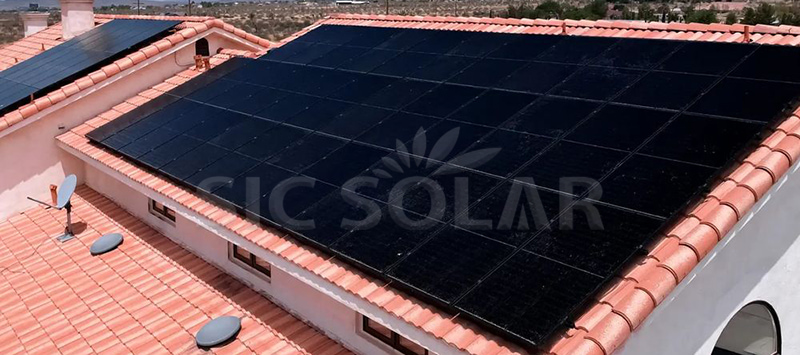
People like tile roofs because they last long, insulate well, and look good. But some folks wonder if you can put solar panels on them. Luckily, you totally can if you use the right stuff and do it the right way.

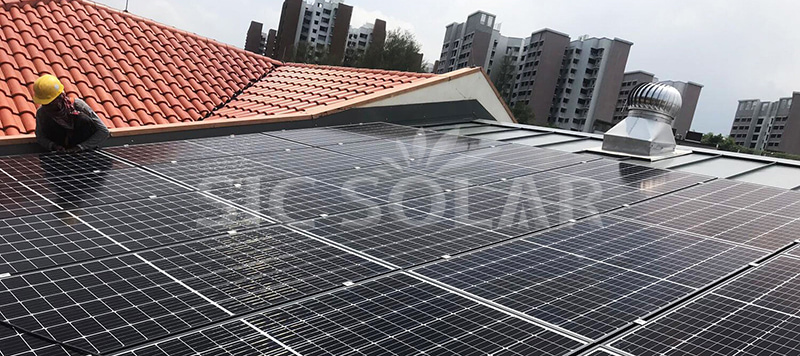
solar panels on sloped roofs

One tricky thing about tile roofs is they can break easily. Clay and concrete tiles might crack if you step on them wrong or drill into them without being super careful. So, solar panel mounts for tile roofs are made to not put any weight on the tiles. Instead, the people putting them in take off some tiles to get to the wood underneath, called rafters. Then they bolt special hooks or brackets onto those rafters. That way, the roof structure carries the weight, not the tiles.

Once the hooks are in, they change the tiles a bit so they fit back around the mounts. This keeps the roof looking the way it did before while keeping the panels secure. The hooks are designed to be small, so the wind doesn't catch them, and they don't stick out too much. Manufacturers such as SIC Solar develop stainless steel roof hooks in multiple shapes to match different tile profiles, helping installers adapt to regional roofing styles.

Keeping water out is also super important. Tile roofs keep water out by overlapping, so any holes you make need to be sealed up tight. They use things like flashing, rubber seals, and sealant around the hooks to stop leaks. If it's done right, a solar system on a tile roof will keep the rain out just as well as the regular roof.

Tile roofs work great with mounting systems that have rails. These let you adjust the panels and spread the weight evenly. Aluminum rails are connected to the hooks, so the panels line up perfectly, even if the roof isn't flat. Plus, it makes a space between the panels and the roof, which lets air flow and keeps things cooler.

Tile roofs are usually pretty strong because they're built to hold a lot of weight. Still, you should always check the roof to make sure it's in good shape before putting panels on, especially if it's an older building. You want to be sure it can handle the panels and the mounting system for years to come.

If you plan it well, use the right parts, and install it carefully, tile roofs can totally have solar panels. That way, people can get clean energy without messing up their roof.

How to Mount Solar Panels on a Pitched Roof?

Putting solar panels on a slanted roof is a pretty standard way to do it for homes and small businesses. Because the roof is already at an angle, the panels can soak up more sun, and rain can wash away any dirt without trouble. But you've gotta do it right and use good stuff to make sure it's safe, lasts long, and works well.

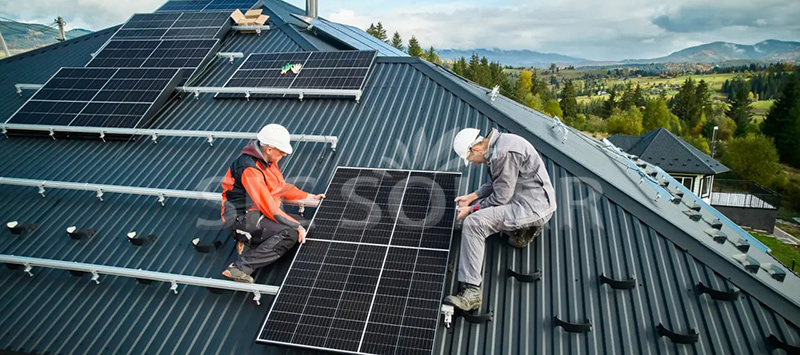
install solar panels on roof

First off, you need to check out the roof itself. See what kind it is – like tile, metal, or shingles – and find the beams under it. These beams are what's going to hold the panels up. Make sure you measure and plan everything out so the panels look good and work as best they can.

Then, you’ve gotta put on the things that will attach the panels to the roof. You’ll use hooks, bolts, or clamps that go right into those beams. Here's a big thing: seal everything up tight so no water can get in. The best systems have built-in stuff to keep your roof safe from leaks. SIC Solar manufacturers make parts that are strong but also easy to put in, so it doesn't take forever and everything stays solid.

Next, you put in aluminum rails. These rails are what the panels will sit on, so they need to be level and bolted down tight. If your roof is a little uneven, there are rail systems that you can adjust to make everything line up right.

After the rails are set, you can put the panels on using clamps that grip the sides and ends. These clamps keep the panels secure but still let them expand a little when it gets hot. Make sure you don't tighten the clamps too much, or you could mess up the panels or the mounting system.

Last thing is to ground everything and tidy up the cables. Grounding keeps you from getting shocked, and keeping the cables out of the weather stops them from getting damaged. If you do all this right, your solar panels will not only stay put but also look good and work great for years.